The Case for Fishing Slower Than You Want To
Most fly anglers move a fly at the speed of their own impatience. Bigger fish rarely eat at that speed.
Saltwater · Speckled Trout · Winter · Retrieve
September 8, 2026
Salt water
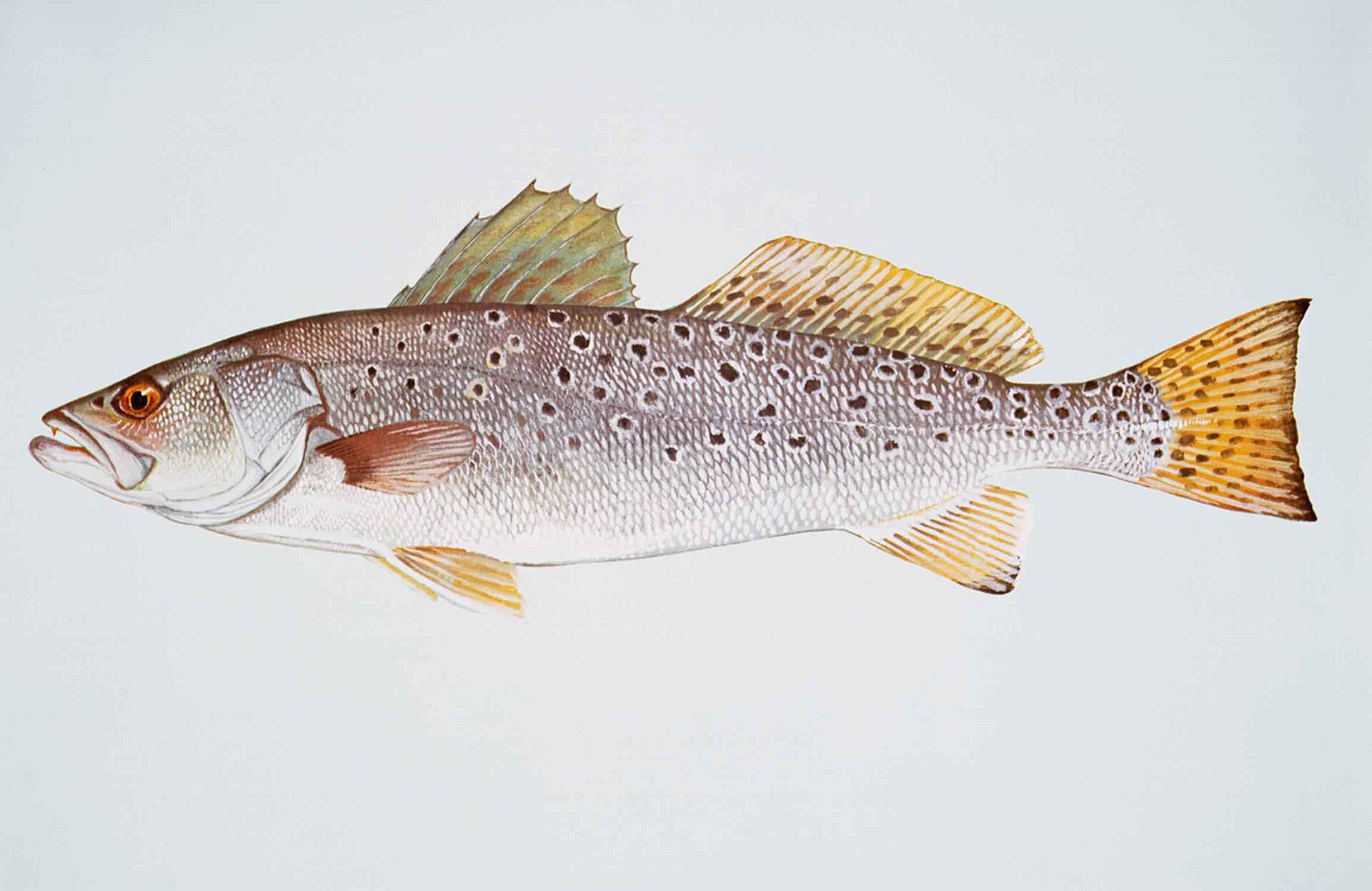
Spotted seatrout are the most common gamefish in the Texas bays and the most consistently underestimated by fly anglers. They are not difficult to catch. They are difficult to catch well — to find the size class worth the trip rather than the schoolie trout that will eat anything moved quickly.
Big trout behave differently than small ones. Small trout school over shell and grass and chase; a five-pounder holds alone along a grass line at daybreak in water barely deep enough to cover her, and she will refuse a fly moved with any urgency. The slower you can stand to fish, the larger the average fish becomes.
Trout hold near structure that breaks current: grass beds, shell pads, drop-offs at the edge of a flat, guts draining a marsh on a falling tide. Wade quietly. Sound carries in shallow water better than most anglers believe, and a trout that has heard you is a trout that has left.
Flies: a small white or olive baitfish pattern, a Seaducer in the grass, and a topwater gurgler for the first hour of light in spring and fall. Weight forward, sink slow, strip short.
The best months are April through June and again in October. Winter trout concentrate in deep mud-bottomed holes and can be caught on a heavily weighted fly moved almost not at all — a technique that requires patience and rewards it.
Most fly anglers move a fly at the speed of their own impatience. Bigger fish rarely eat at that speed.
Saltwater · Speckled Trout · Winter · Retrieve
September 8, 2026New writing, three times a week. Freshwater and salt.