Flies for Muddy Water
In the upper Laguna Madre, dirty-water redfish flies need a readable outline, a controlled sink, and room to work near the bottom.
Saltwater · Redfish · Summer · Fly selection
September 19, 2026
Salt water
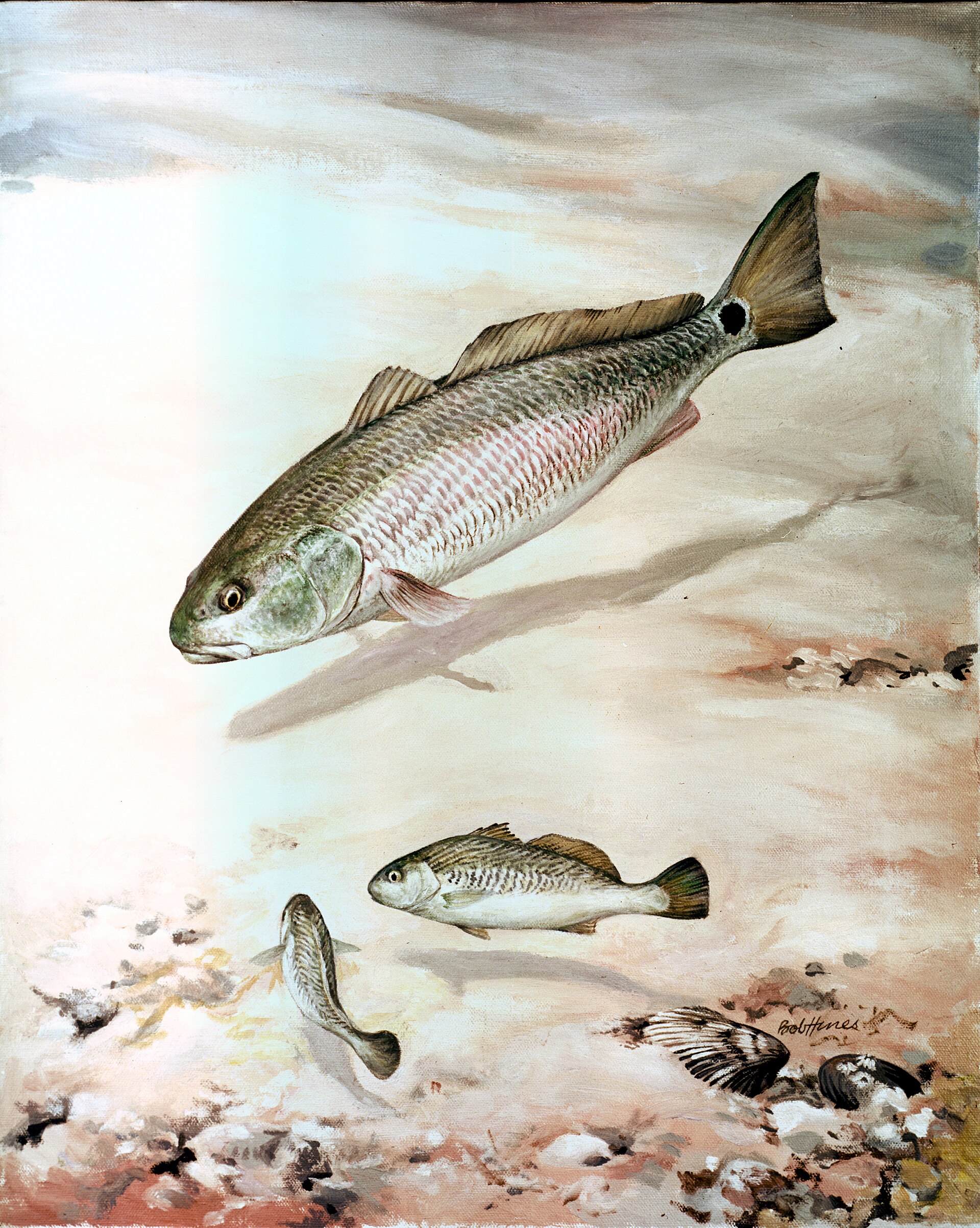
Redfish — red drum, to the biologists — are the reason most Texas fly anglers own an eight-weight. They live in water so shallow their backs break the surface, they eat crabs and shrimp with more enthusiasm than precision, and they are forgiving of a fly that lands roughly in the right place.
They hold in the marsh drains and along the spartina edges of the Laguna Madre, Matagorda, Sabine, and every bay in between. On a calm morning in a foot of water you will see the tail before you see the fish: copper, black-spotted, tipped up while the fish roots in the mud for a crab.
What matters most is the angle of the presentation. A redfish feeding head-down has a narrow cone of vision and poor eyesight to begin with. Lead the fish by three or four feet, let the fly settle, and move it only when the fish is close enough to have a chance. A fly stripped away from a redfish looks like nothing it has ever eaten.
Flies: small crab patterns in tan and rust, a Clouser in chartreuse and white for deeper water, and a spoon fly when the water is dirty and you need the fish to find the thing by flash alone. Weedless matters more than most people admit. Hook sizes 2 to 1/0.
Redfish are catchable all year in Texas. They are best in fall, when they school in the shallows and the water clears, and hardest in the heat of August, when they push into water too thin to pole and feed mostly at first light.
In the upper Laguna Madre, dirty-water redfish flies need a readable outline, a controlled sink, and room to work near the bottom.
Saltwater · Redfish · Summer · Fly selection
September 19, 2026A tailing fish tells you where it is looking, how fast it is moving, and whether it is worth a cast.
Saltwater · Redfish · Fall · Sight fishing
September 14, 2026New writing, three times a week. Freshwater and salt.